

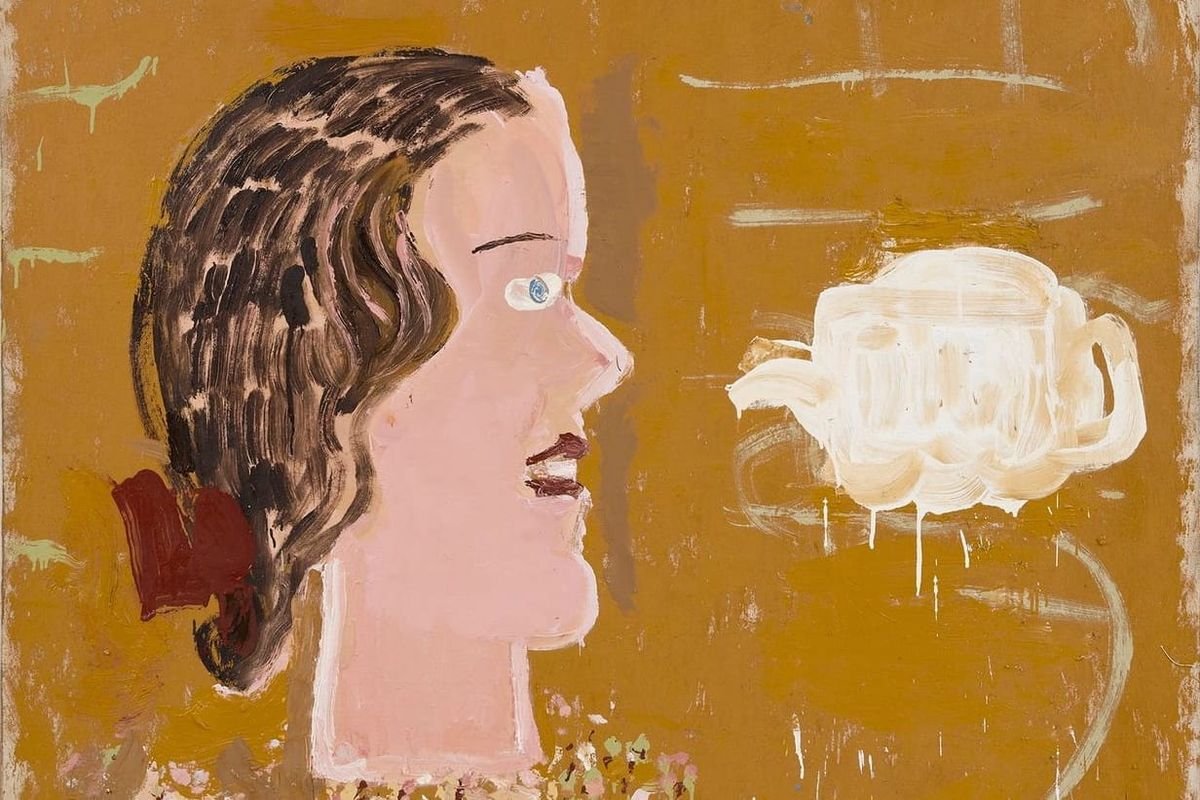
The exhibition The Prime of Your Life, on view at Marc Straus Gallery in New York, brings together eighteen women artists all over seventy‑five, a constellation of painting, drawing, sculpture, and installation that ranges from intimate works to room‑spanning pieces. Their common denominator is age, but the works refuse to present a unified generational statement; instead they function as a series of calls and responses, a cacophony of materials, concerns, and styles.
Linda Nochlin’s 2008 essay, “Old‑Age Style: Late Louise Bourgeois,” opens with a question that frames the exhibition’s premise: “What is an ‘old‑age style’? Is it the same as a ‘late style’?” Drawing on Edward Said’s notion that late styles abandon the comforting connections that hold an art object together, dealing instead with disconnects, abysses, unyielding dislocation and unresolved contradiction, Nochlin’s framework helps us see how the works in this exhibition force us to reckon with shifts and disruptions, whether biographical or not, which resist easy historical categorisation.
Marina Abramović’s photograph Standing with Skeleton (2008/2016), installed near the gallery’s entrance, immediately poses the question. The large‑scale image shows Abramović in black against an inky background, an ivory skeleton perched on her back. Over five decades she has habitually used her body in performance‑driven work, favoring straight‑on confrontation. The photograph, divorced from the live context of pieces such as The Artist Is Present, reads as almost inanimate, even Halloween‑like. Does knowing the strength of her earlier work make this look like a comic pastiche? Is it fair to compare? And, crucially, does a later work diminish the impact of a stronger, more provocative earlier one?
The exhibition thus asks what “prime” means for a woman artist when the market and museums are most likely to valorise her work in older age. By presenting a range of practices without forcing a single narrative, The Prime of Your Life refuses to settle for easy answers. Instead it holds up a critical mirror to twenty‑first‑century feminist art history, inviting viewers to consider how age, recognition, and artistic evolution intersect.