


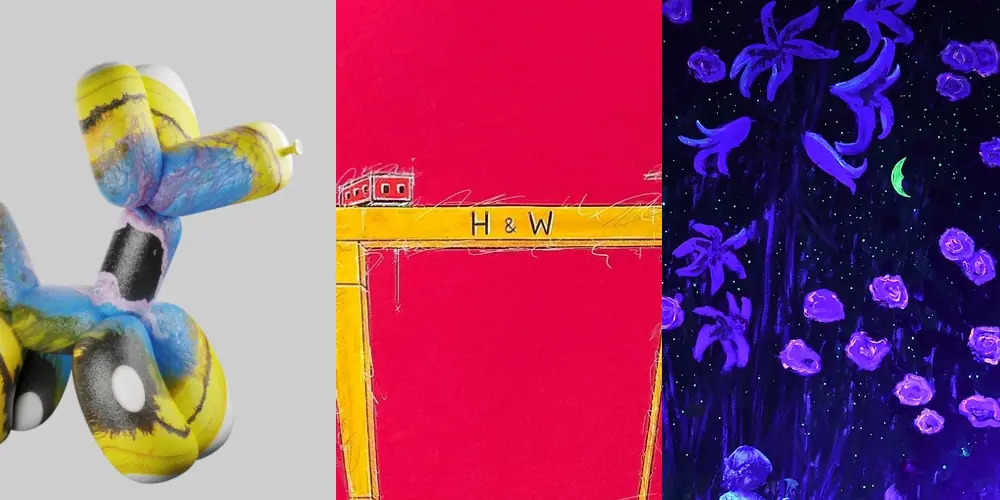
There is something compelling about discovering an artist while their visual language is still unfolding. For a new generation of artists, limited editions have become an increasingly natural way of bringing ambitious ideas beyond the gallery and into a wider world of collectors and viewers.
AJ Laird, Veronica Green and Mario Grateli approach that world from very different directions. Laird works with recognisable imagery, popular culture and place; Green explores light, perception and transformation; Grateli takes familiar objects and cultural symbols into a more surreal, digitally constructed space. Their practices differ, but all three share an interest in making images that remain immediately engaging while revealing more the longer they are considered.
AJ Laird: The Familiar, Reimagined
From Belfast, AJ Laird has developed a visual language somewhere between contemporary art, illustration and popular culture. Self-taught, Laird works with subjects that already carry meaning: cities, cultural figures, sport, music and familiar symbols, and reshapes them through bold compositions, colour and graphic treatment.
Belfast is particularly important to his work. Pieces such as Made in Belfast and Samson & Goliath transform recognisable elements of the city into highly composed images, turning local identity into something contemporary and visually immediate. His work often has the directness of an image designed to communicate quickly, but there is enough stylisation and detail to make the familiar feel newly observed. (ajlairdart.com)
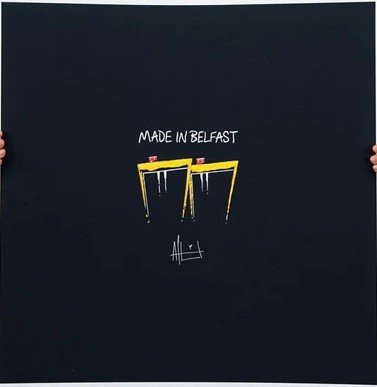
That same quality carries naturally into his limited editions. Laird’s prints preserve the strong graphic character of his imagery while allowing the work to reach an audience beyond the original painting. His editions are produced using fine-art printing methods and Hahnemühle papers, with individual works released in limited quantities. (ajlairdart.com)
There is a sense throughout Laird’s work that contemporary art does not have to distance itself from popular imagery. Instead, the everyday and the recognisable can become the starting point for something distinctly personal.
Veronica Green: The Image in Motion
Veronica Green begins with something less fixed.
Based in Venice and originally from New Zealand, Green has built her practice around colour, light, perception and transformation. Her paintings can initially appear intensely luminous and dreamlike, but their visual experience changes depending on how they are encountered.
Green has developed what she calls triple-scene painting, using natural light, ultraviolet light and phosphorescent materials to create different visual states within a single work. Forms can emerge, disappear or become visible in new ways as the lighting changes. (veronicagreen.com)
The technique becomes part of a broader investigation into perception and memory. Rather than treating a painting as a fixed image, Green creates works that seem to exist between states; between what is immediately visible and what is waiting to be revealed.
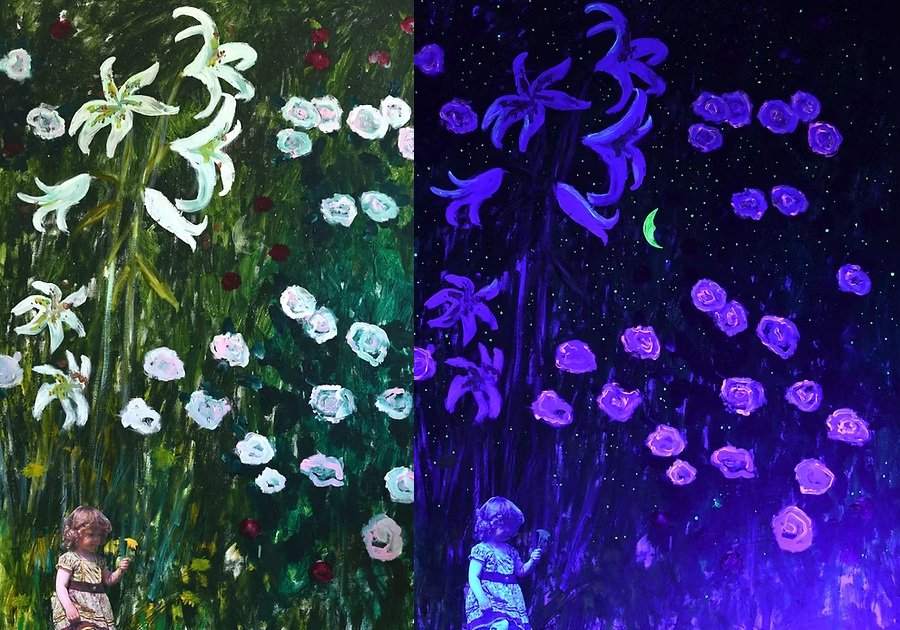
Her limited editions carry this idea into print. Produced as museum-grade giclées on Hahnemühle paper and then hand-finished with acrylic and phosphorescent pigments, the prints retain an element of the material experimentation found in her original work. (veronicagreen.com)
Where Laird asks us to look again at things we already recognise, Green asks us to question what we are actually seeing.
Mario Grateli: Familiar Things in Another Reality
Mario Grateli takes a different route into contemporary imagery. Born in Italy in 1994 and now based in the United States, Grateli works between digital experimentation and traditional printmaking, using three-dimensional objects and familiar cultural forms as the basis for surreal, highly stylized images.
His visual world is immediately recognisable for its saturated colours, unusual tonal shifts and carefully constructed surfaces. Objects that might normally feel playful or ordinary become strangely atmospheric. A balloon dog, for example, can be transformed through layers of intense blue into something that seems simultaneously familiar and alien. His Loyal Bloon was released as a limited edition of 150.
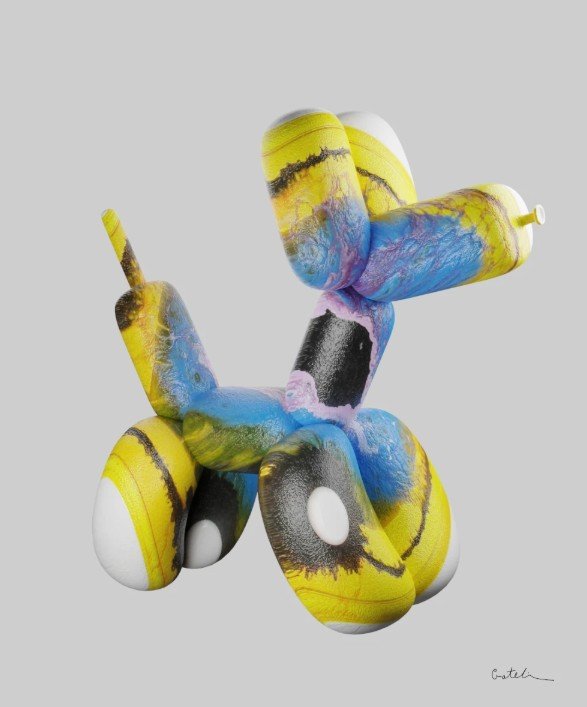
Grateli’s practice sits comfortably between pop culture and digital art, but there is a painterly sensibility beneath the technology. Colour, texture and light are treated less as decorative elements than as ways of changing the emotional character of an object.
That relationship between the digital and the physical is especially important to his limited-edition practice. Grateli’s work is released primarily through limited print drops, with editions designed to translate digitally constructed imagery into tangible objects. Some releases have also introduced unique variations within an edition, adding an element of chance and individuality to otherwise identical works.
Three Ways of Seeing
Laird, Green and Grateli offer three very different responses to the contemporary image.
Laird starts with recognition, taking places and cultural symbols that already mean something and giving them a new visual identity. Green starts with perception, creating images that refuse to remain entirely fixed. Grateli begins with familiar objects and pushes them into a digitally constructed reality where colour and form become slightly strange.
Their work demonstrates how varied the contemporary limited edition can be. A print does not necessarily have to be a straightforward reproduction of an original. It can extend an artist’s language, become a site for experimentation, or provide a different physical form for an idea that began digitally.
Perhaps that is what makes these three artists interesting to encounter together. Their work occupies very different visual territories, but each is concerned with the same fundamental question: how can a familiar image become something we want to look at again?
For Laird, the answer lies in transformation through graphic language. For Green, it is found in light and changing perception. For Grateli, it emerges through colour, digital construction and the subtle distortion of the familiar.
Three artists, three visual worlds, and three very different reasons to look twice.