


By Salomé Cohen, MA Art History | Published: Oct 16, 2026
Before blue-chip galleries controlled the global art market, Berthe Weill recognized genius where others saw only madness. As one of the first women to own a gallery, she exhibited and sold the leading figures of the Parisian avant-garde, from Pablo Picasso to Suzanne Valadon. Her eye for emerging talent gave unknown artists visibility and a place in the market. Though she helped shape modern art history, her name disappeared from the record for more than a century.
The Making of a Dealer
Berthe Weill entered the world on November 20, 1865, in a modest Jewish household in Paris. Art surrounded her from childhood. Because her health was delicate, she studied drawing with a distant relative, Salvator Mayer, who dealt in prints and curiosities. After Mayer died in 1897, Weill went into business with her brother Marcellin. They opened a modest space at 25 rue Victor Massé, offering antiques and prints. A partnership with Pedro Manach, a young Spanish industrialist, followed, and together they acquired their first Picassos.
Manach soon returned to Spain for family reasons, and Weill had already separated from her brother. These departures became a declaration of independence. By 1901 she was the first woman to operate an art gallery in Paris. She opened a tiny shop in Montmartre under the sign “Galerie B. Weill,” deliberately leaving out her first name to avoid the era’s misogyny. She also preferred the word “gallery” over “dealer,” a choice that was unusual at the time. Alongside Ambroise Vollard, she was among the few sellers championing contemporary artists.
A Talent Scout for the Avant-Garde
Weill’s greatest strength was her ability to spot future masters before anyone else. She regularly visited the Salon d’Automne to find new names and gave many twentieth-century artists their first professional opportunities. She championed Toulouse-Lautrec, backed the Fauves and Cubists at the start of their careers, and discovered Picasso.
Pablo Picasso and the First Paris Sales
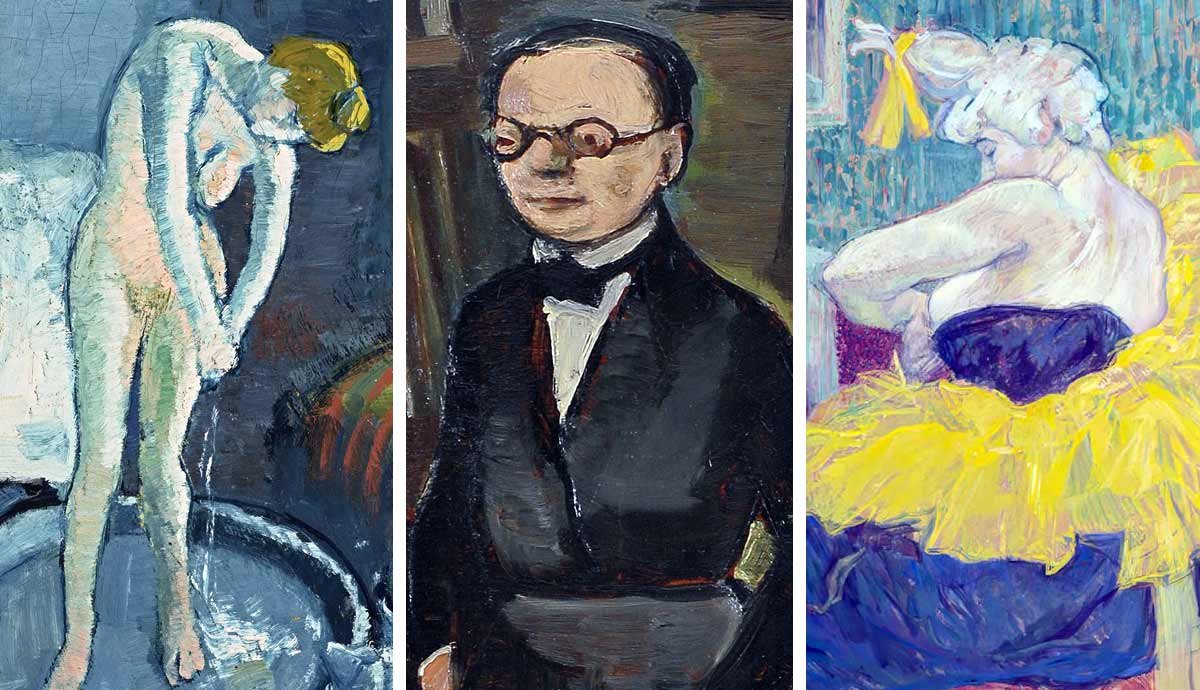
Picasso appeared among the earliest artists in her gallery. Weill sold and exhibited his work beginning in 1901, acquiring pieces from his Blue and Rose periods. She helped him financially during difficult years by selling his paintings, sometimes at modest prices. Several of those works now hang in museums. She also represented Cubist painters such as Picabia, Braque, and Léger.
Amedeo Modigliani and the 1917 Scandal
Weill admired Modigliani deeply. She met him through his dealer Léopold Zborowsky, bought five of his works, and organized his first and only solo exhibition in 1917. The show featured portraits and nudes defined by elongated forms and emotional intensity. It ended in scandal when police closed it within hours because the painting Nu Couché was visible from the street.
She also showed members of the School of Paris, including Marc Chagall, Jules Pascin, and Chaim Soutine. She was especially close to Pascin, whom she called “my dear Pascin.” He illustrated her 1933 memoir, Bam, Right in the Eye.
Raoul Dufy and the Fauvists
Weill dealt in Fauvist art as early as 1902, exhibiting Matisse before turning to André Derain, Vlaminck, and Kees Van Dongen. She was among the first dealers to recognize and support them. Her favorite was Raoul Dufy, who called her “little Mother Weill” in his letters. She presented him more often than anyone else, with one solo show and 35 group exhibitions. She helped establish him as a Fauvist, even though Henri Matisse, the movement’s leading figure, refused to do so.
Henri de Toulouse-Lautrec and the Painted Side of Montmartre
Toulouse-Lautrec attracted Weill’s attention for his scenes of Montmartre, from cabaret entertainers to its more marginal residents. Although he was already famous for posters, she remained interested in his paintings and pastels, including Clownesse Cha-U-Kao from 1895. She made sure this part of his output stayed visible beyond the posters that had made his name.
Marie Laurencin and a Lasting Friendship
While she represented many male artists, Weill also promoted women. She was one of the first gallerists to sell work by women artists, both contemporary and historical. Twenty-nine of the 149 solo exhibitions at her gallery were devoted to women. Marie Laurencin benefited from this support. The two shared a deep friendship and the same social circle. Weill sold works such as The Three Friends and Women with a Fan, and her exhibitions helped Laurencin gain entry into major collections and shows.
Suzanne Valadon and Two Decades of Representation
Beyond Laurencin, Weill represented Berthe Morisot, Tamara de Lempicka, Léonie de Maistre, and Valentine de Saint-Point. Suzanne Valadon left the strongest impression. Weill represented her from 1913 to 1932 and hosted three solo retrospectives. Their collaboration lasted twenty years, despite Valadon’s reputation for provocative yet realistic nudes. Weill brought her work to a wider public.
Why History Overlooked Her
André Warnod summed up her influence in 1923: “Every painter who has a name today, everyone who has played a role in contemporary art, was welcomed by her when they were just starting out and had no support. They all came through her.” The quote reveals a contradiction. Weill played a major role in discovering avant-garde artists, yet art history books left her out.
She enjoyed recognition during her lifetime, but after her death her name faded. A renewed focus on women in art history has restored her reputation. Interest revived after 2007, especially when a Picasso portrait of her was declared a national treasure. Her memoirs were reissued in 2009 and translated into English in 2022. That same year, Paris placed a commemorative plaque at her former gallery address and named a garden for her in the 3rd district, close to the Picasso Museum.
Business Practices and Final Years
Weill served as patron and dealer to roughly one hundred artists. She had unconventional methods, sometimes hanging paintings before the paint had dried. She installed electric lighting before other galleries did. She maintained a relentless pace, opening an exhibition every two weeks and publishing a catalog for each one. Nevertheless, her peers dismissed her as an amateur because she was a woman. She also admitted in her memoirs that she was a poor manager.
Her biggest weakness was an inability to separate masterpieces from lesser works. She combined the roles of patron and dealer but neglected the commercial side. She did not use exclusive contracts, unlike many of her colleagues. Consequently, she never became wealthy, and her artists eventually moved to larger galleries. She closed the space in 1940 for financial reasons and because of the growing threat of Nazism. She escaped anti-Semitic persecution but lived in extreme poverty. After the war, Maurice Rheims organized a sale of works by all the artists she had represented and gave her the proceeds so she could live more comfortably in her final years. She died on April 17, 1951, at the age of 85.