


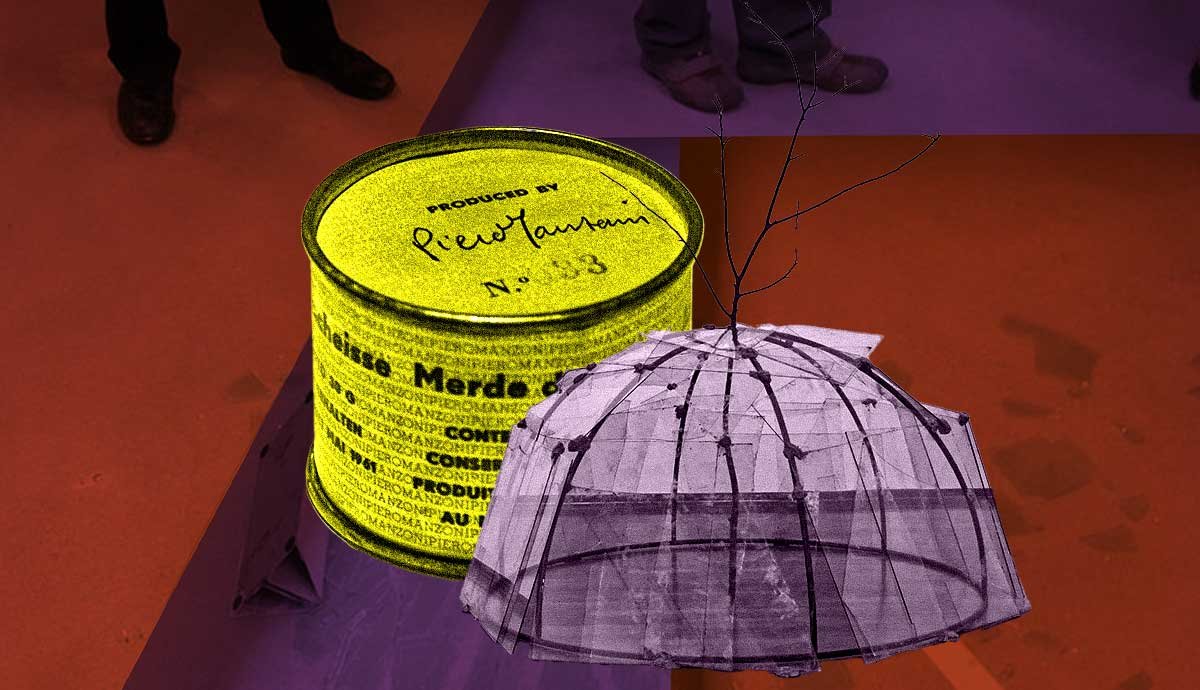
Arte Povera originated in the 1960s in Italy. The term, coined by the art critic Germano Celant, referred to artists using cheap non-artistic materials like metal scraps, rags, foil, earth, or wood. It was a protest against the increasingly commodifying art sphere, as artists created works that fell outside the category of high-price elitist art.
Six important works of the Arte Povera movement include:
1. **Venus of the Rags** by Michelangelo Pistoletto (1967): A sculpture of a goddess of beauty made from a pile of discarded rags, critiquing the contrast between high art and mundane materials. The work reflects Pistoletto’s reaction to student protests and critiques destructive capitalism and elitism in the art world. Today, it symbolizes the impact of fast fashion on the environment.
2. **To Invent of the Spot (12 Live Horses)** by Jannis Kounellis (1972): Kounellis brought 12 live horses into a gallery, disrupting the sterile environment. The performance celebrated natural experiences over urban life and was an anticapitalist statement, emphasizing fleeting, organic reality.
3. **Merda d’artista** by Piero Manzoni (1961): Manzoni presented sealed cans of human feces, mocking the art market’s fetishization of artists. The provocative work critiqued how artists become commodities.
4. **Untitled (Eating Structure)** by Giovanni Anselmo (1968): Anselmo used lettuce between granite blocks, illustrating the need for maintenance and care in art and life. Initially using meat, he later chose lettuce to align with global food scarcity concerns.
5. **Igloo with Tree** by Mario Merz (1969): Merz’s igloo sculptures symbolized human resilience and shelter, blending natural and artificial elements. The clear glass dome with a tree through it represented survival and adaptability.
6. **Imprint** by Luciano Fabro (1964): An opaque-glass circle with a footprint, celebrating Earth’s longevity. Its destruction in 2013 added commentary on media and art world destruction.
Arte Povera artists rejected high-art elitism, embracing raw materials and anti-capitalist themes.